
EICR & Electrical Inspections
Nottingham
Want to know your electrics are safe, compliant and fit for years more use? An Electrical Installation Condition Report (EICR) gives you the answer in black and white. We carry out EICRs and electrical inspections for homes, rental properties and commercial premises across Nottingham and Nottinghamshire.
Whether you need a landlord EICR for a rental in Beeston, a pre-purchase inspection on an older property in Mapperley, or fixed wire testing for a commercial unit, we'll test the installation against BS 7671 (the 18th Edition), score every observation against the C1/C2/C3 coding system, and give you a written report you can actually act on.
Looking for an EICR quote?
We'll be back to you the same working day.
Notts Gas & Electrical Ltd
EICR and fixed wire testing across Nottinghamshire
An EICR (also called fixed wire testing in commercial settings, or a periodic electrical inspection) checks the condition of your fixed installation: the wiring inside walls, the consumer unit, sockets, switches, lighting points, and the earthing and bonding arrangements. Things you can't see with the naked eye, but that determine whether your electrics are safe.
For landlords in England, it's not optional. The Electrical Safety Standards in the Private Rented Sector (England) Regulations 2020 require every rental property's fixed electrical installation to be inspected and tested at least every five years, with the report provided to tenants within 28 days.
For commercial customers, fixed wire testing keeps you compliant with the Electricity at Work Regulations 1989 and helps satisfy insurers, who increasingly ask for an up-to-date EICR before processing claims.
Our NAPIT-registered electricians in Nottingham carry out EICRs for homeowners, landlords and commercial premises.
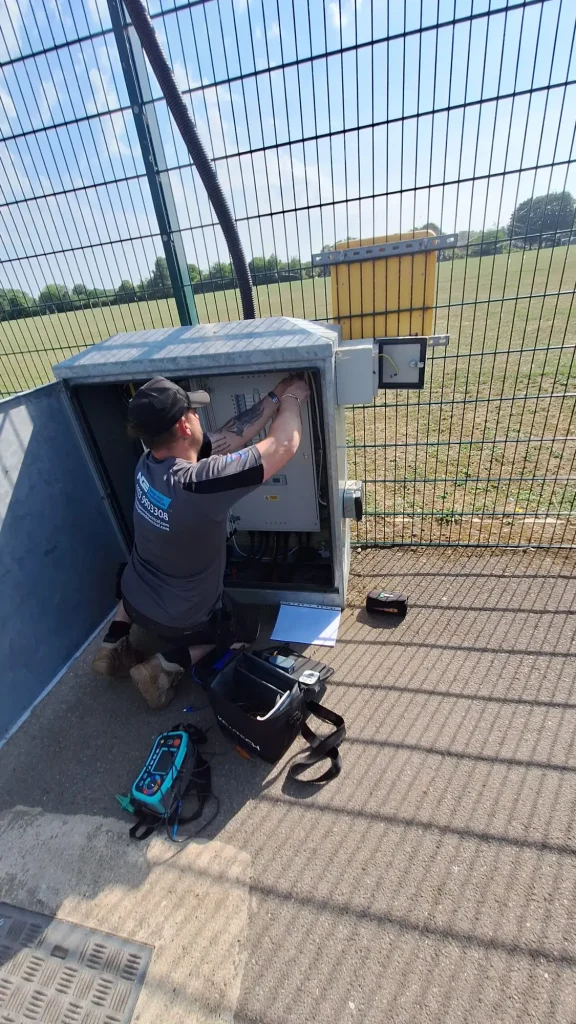
Notts Gas & Electrical Ltd
What's included in our Electrical Inspections & Testing service?
Full visual inspection of the fixed installation
We start with a thorough visual check of the consumer unit, sockets, switches, light fittings, accessible wiring runs and termination points. A lot gets picked up at this stage: scorched terminals, missing covers, undersized cable, DIY work that shouldn't have happened.
Dead and live electrical testing of every circuit
We isolate the supply and test continuity, insulation resistance, polarity, and earth fault loop impedance on each circuit. Then we re-energise and verify RCD operation under live conditions. This is what separates a real EICR from a quick visual walk-round.
C1, C2, C3 and FI coding of every observation
Each finding is coded against the BS 7671 system. C1 means danger present, immediate action required. C2 means potentially dangerous, remedial work needed. C3 means improvement recommended (the installation is still safe). FI means further investigation required to determine whether a C1 or C2 applies. If your report comes back C1 or C2, the installation is classified as unsatisfactory and remediation is needed.
Earthing, bonding, and protective device verification
We check that main earthing and protective bonding meet current regulations, RCDs cover the circuits they should, and any AFDDs or SPDs (if present) are functioning. This is the part of an EICR that catches the silent risks.
A written report you can actually use
You receive a full Electrical Installation Condition Report covering test results, coded observations, and a clear overall verdict (satisfactory or unsatisfactory). Digital copy by email, printed copy if you want one. For landlords, the report is in the exact format the regulations require.
Honest next-step advice
If remedial work is needed, we explain what's urgent and what isn't, what we'd recommend and what's "nice to have". Where the report points to wider remediation, related services like Consumer Unit Upgrades, Part & Full Rewires, or Emergency Electrical Call-Outs may apply.
When you may need an electrical inspection in Nottingham
Inspections aren't only for when something's already gone wrong. They're how you stay ahead of it.
Need help quickly?
We deliver Electrical Inspections & Testing with minimal disruption, clear communication and a strong focus on safety, compliance and reliability. Get in touch today to discuss your requirements and arrange a competitive quote.
Three reasons clients choose us
Why choose Notts Gas & Electrical Ltd for electrical inspections in Nottinghamshire?
Local team, full Nottinghamshire coverage
Based in Clifton (NG11), we cover Nottingham city centre, West Bridgford, Beeston, Long Eaton, Carlton, Arnold, Hucknall, Mapperley and out into Mansfield, Newark and Eastwood.
Domestic, landlord, and commercial under one roof
We test single-let homes, multi-let HMOs, retail units, offices and light industrial. Same team, same standards, paperwork tailored to whichever regulations apply to you.
Reports written to be understood
Ours explain what each observation means, what priority it should get, and what the realistic options are for remediation. If you've inherited an EICR from another firm, we can help interpret it too.
What our customers say
Rated 5 stars by Nottingham homeowners
Liam & Lewis are a brilliant team and know their stuff, when you need an electrician call them you won't be disappointed. A top service all round so we have booked them in for another job!
I can't speak highly enough of the team at Notts Gas and Electrical. We first met them during a short-notice call-out, and ended up working with them for several months on a complicated project involving electrics, plumbing and building work.
We have no doubt to recommend this company to anyone in need. Nice people and totally professional. Can really solve all the problems at a very reasonable price. 100% satisfied with their service!
Rated 10/10 on Checkatrade for tidiness, workmanship and reliability. Turned up on time, explained everything clearly and left the place spotless. Would use again without hesitation.
They turned up within 20 minutes, diagnosed & fixed the issue very quickly and were thoroughly nice guys to boot. Happily recommended.
Great service from start to finish, Olivia is extremely helpful, the lads really go above and beyond with their work. Cannot speak highly enough of Liam & Lewis.
Commercial Electrical Testing
Commercial EICRs & Fixed Wire Testing
We carry out EICRs and fixed wire testing for commercial and industrial premises across Nottinghamshire, including offices, retail units, warehouses, factories, restaurants and food production facilities. Fixed wire testing is a legal requirement for most commercial premises and must be renewed at the intervals specified in the previous report, typically every five years.
Our NAPIT registered electricians test to BS 7671 and provide clear C1/C2/C3 classification reports. We can work around your operating hours, including evenings and weekends, to minimise disruption to your business.
Request a commercial EICR quoteSpecialist Sectors
EICRs for Food Factories & Production Facilities
Food factories, bakeries, breweries and food preparation facilities in Nottinghamshire have specific electrical safety requirements. Machinery, refrigeration systems and production lines need thorough testing, and your insurer or local authority may require current EICR documentation as part of compliance audits.
We also provide fire alarm installations and testing, emergency lighting and general commercial electrical work for the same premises.
FAQ
Common questions about electrical inspections & testing
Serving Nottingham & Nottinghamshire
Some of the areas we cover
We're based in Clifton and cover Nottingham, West Bridgford, Beeston, Long Eaton, Arnold and the wider NG postcode area. Some of the areas we work in: